Nobody Owes You a Scan: The QR Code Habits Quietly Draining UK Print Budgets

Photo: Gangulybiswarup, CC BY 4.0, via Wikimedia Commons
You have seen the leaflet. Maybe it came through the door last Tuesday, wedged between a takeaway menu and a notice about bin collections. Somewhere near the bottom, half a centimetre wide, sits a QR code. No headline. No promise. No reason. Just the little square pattern and the words scan me.
Technically, it works. That is the trap. The code resolves, the printer did their job, the design software exported it fine. And yet the response rate is flat, the team blames print as a channel, and somebody says the words print is dead in a meeting where nobody has the data to argue.
Print is not dead. Careless print is expensive.
The box-ticking problem
There is a version of this that is not really about QR codes at all. It is about how offline campaigns get signed off in a hurry. A code gets added because it feels modern, because a competitor has one, because somebody read that it makes a campaign interactive. Nobody in the room has been asked the only question that matters: what is on the other side, and why would a stranger want it today?
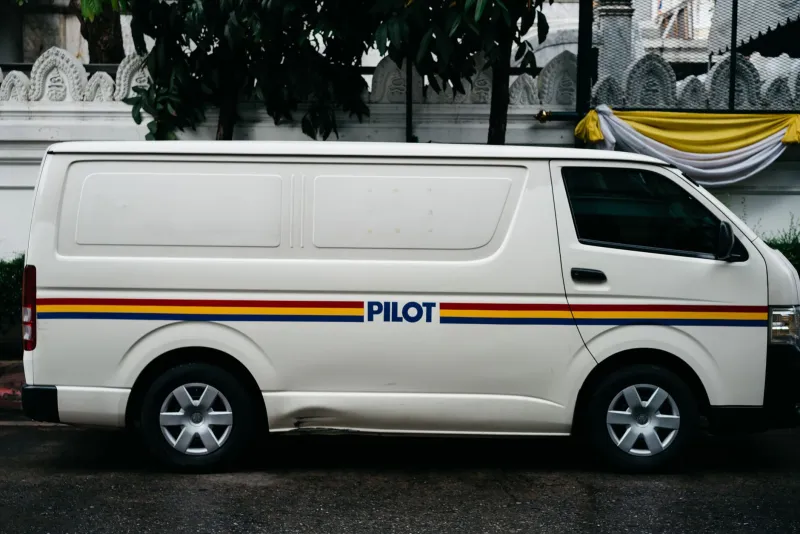
So you end up with a code on a van, on a receipt, on a table talker in a café in Leeds, all leading to the same homepage. Not a page. The homepage. The big one with the carousel and the cookie banner and twenty-three navigation links. The one that takes four seconds to load on a middling 4G signal outside a retail park.
That is not a strategy. That is a door painted onto a wall.
Three reasons a stranger actually lifts their phone
Strip away the jargon and scanning behaviour comes down to three motives. Get one of them clearly wrong and the code stays unscanned, no matter how neatly it is typeset.
1. Access
The person wants something they cannot get otherwise. A full menu with allergens, a timetable, the size guide, the full list of stockists. Scanning replaces a thing that would otherwise be missing, awkward or out of date. This is the most reliable motive, and it is also the easiest to waste, because if the same information could be printed in a legible font at a sensible size, why make somebody reach for a phone?
Access only earns its place when the digital version genuinely does more. Searchable. Filterable. Updated last week rather than last spring.
2. Saving
A discount, a free refill, a sample, a priority booking window. Reward for the small effort of a scan. This motive is powerful and dangerously easy to cheapen. If every leaflet in the neighbourhood offers ten per cent off, you have not created a reason to scan, you have created wallpaper with a coupon attached.
And please, be honest about the friction. If claiming the saving means creating an account, confirming an email, verifying a phone number and then downloading an app, you have not offered a saving. You have offered a chore with a discount hidden at the end.
3. Entertainment
Something worth thirty seconds of attention. A short film shot in the actual shop, a quiz, a competition, a behind-the-scenes look at how the product is made. This is the hardest to pull off and the most memorable when it works. The bar is higher than most brands assume: the internet is not short of things to look at.
If your content would not hold up as a standalone post on social, do not dress it in a QR code and call it engagement.
Where the moment dies
Here is the bit that genuinely costs money. The scan happens, and then the landing page squanders it.
Wrong destination. Sitewide homepages instead of a single-purpose page. The visitor arrives with one specific intention and is handed a navigation maze.
Wrong context. Somebody scans a code on a bus shelter, standing in the rain, with a coat collar up. The page they land on is a desktop-first brochure with a PDF at the bottom. Design for one hand, poor light and a two-minute attention span.
Wrong job. The code asks for a newsletter signup when the person wanted opening hours. Ask for the small thing first. The email can come later, once you have been useful once.
Wrong speed. If the page takes more than about three seconds, a meaningful slice of people have already gone. That is not a design preference, it is a leak in the bucket.
Wrong format. A code on a moving vehicle, a curved surface or a low-contrast background is a code that fails quietly. Test at the actual size, in the actual place, with the actual phone.
The tracking that nobody sets up
If you cannot tell which printed item produced which scan, you have no way to improve the next run. This is where a lot of SME campaigns stop being a channel and start being a rumour.
Use a separate destination URL for every placement. Menu card, window decal, van, leaflet, receipt: one each. Keep them short, keep them readable, and let your web analytics do the counting rather than a guess in a Friday meeting. If you are paying for a code service, check whether the tracking survives the campaign, because plenty of the free ones do not.
And write down what you expected. Not a forecast with three decimal places, just an honest number. Twelve scans from the café table talker, two hundred from the leaflet drop. Without a before, you will never know whether the after was good.
A pre-print checklist
Run this before anything goes to the printer. It takes twenty minutes and saves a great deal of regret.
- Name the single job the scan does, in one sentence a customer would understand.
- Match it to one of the three motives: access, saving or entertainment. If it does not fit any, delete the code.
- Give the code a reason printed directly above it. Scan me is not a reason.
- Check the destination loads on a mid-range Android phone on a slow connection.
- Make the landing page do one job. No carousel. No cookie wall before the content.
- Set up a unique URL per placement and confirm the numbers appear in analytics.
- Test at final print size, in the final position, in daylight and in gloom.
- Print a short, human URL alongside the code for the people who would rather type.
- Keep the landing page live for the full life of the printed item. Sounds obvious. It is not.
The honest version
A QR code is a door. Doors are useful when there is a room behind them, and slightly ridiculous when there is not. In 2026 the technology is not the interesting part, and it has not been for years. The interesting part is deciding what you are offering somebody who has already made the effort to point a camera at your print run.
Get that right and print stops being the channel that did not work and starts being the one that quietly does the heavy lifting.
Get it wrong and you have paid a printer to deliver a poster telling people to go to your homepage.
Which, to be fair, they already knew how to find.