The Two-Bite Rule: Direct Mail That UK SMEs Actually Keep
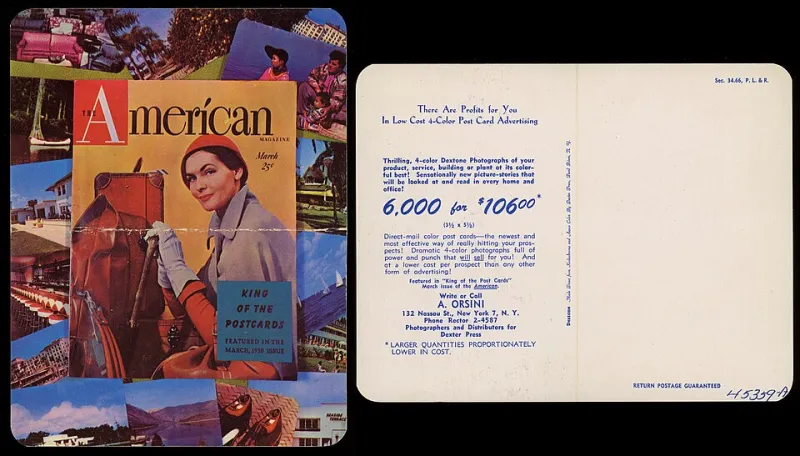
Photo: Steve Shook from Moscow, Idaho, USA, CC BY 2.0, via Wikimedia Commons
Direct mail has a reputation problem. Half the market thinks it means a glossy brochure nobody asked for. The other half thinks it means a cheap flyer with a starburst and a phone number in 72-point type. Both are missing the point. In 2026, the doormat is one of the few places a UK SME can buy attention without fighting an inbox filter.
But attention is not the same as action. Most mailers fail because they try to do too much: three offers, four messages, a QR code, a handwritten note and a slogan about being 'passionate about quality'. The fix is a simple discipline we call the two-bite rule.
Why the doormat still matters
Email is crowded. Social is rented. Search is increasingly answered before anyone clicks. A piece of well-made post lands in a finite space and gets handled. It might be binned, but it is at least seen. For local trades, professional services, hospitality, retail and B2B suppliers, that can be a sensible part of the mix.
The catch is that direct mail is unforgiving. You cannot A/B test your way out of a dull envelope. You cannot retarget someone who never noticed the postcard. The creative has to do the work on the first pass.
The two-bite rule
Think of your mailer as two bites of attention.
Bite one: instant brand recognition. Within a second, the recipient should know who sent it and whether it is for them. That means your distinctive colours, logo, typeface or photography — not a generic stock image of a handshake. It also means clarity on the envelope or outer panel. If the recipient has to open it to find out who it is from, you have wasted the first bite.
Bite two: one clear offer. Within the next few seconds, they should know what you want them to do and why it is worth doing now. One offer. One action. One reason to keep the piece.
If either bite is missing, the mailer usually ends up in the bin. If both are there, it has a chance of going on the fridge, the noticeboard or the 'deal with later' pile. That is what 'kept' means in practice.
Bite one: look like yourself, fast
Brand recognition is not about stamping the logo in every corner. It is about being recognisable before the recipient reads a word. A coffee roaster might use the same burnt orange as its packaging. A solicitor might use the same restrained typeface as its shopfront. A building supplier might use a photo of its actual yard, not a stock image of a bloke in a hard hat pointing at a clipboard.
Use the outer panel properly. A DL envelope has a small canvas, so put the sender name, a short line of context and one visual cue on it. If you are posting to a business, the company name and the recipient's role are more useful than 'Dear Sir/Madam'. If you are posting to a home, the householder's name — if you have it lawfully — beats 'The Occupier'.
Avoid the temptation to over-design. A clean A5 postcard with one strong image and one clear message will usually beat a 12-page brochure that tries to tell the whole company story. The brochure can come later, once they have decided to keep you.
Bite two: make one offer easy to accept
A good direct mail offer is specific, relevant and time-bound. '10% off' is weaker than 'Book a 20-minute tasting for your team before 31 March and we will bring the beans.' The second version tells the recipient what will happen, who it is for and when to act.
Make the action obvious. A QR code is fine, but give it a short URL too. Not everyone wants to scan. If you want a phone call, use a dedicated number or extension so you can measure it. If you want a visit, say what they should bring or ask for. If you want a reply, include a pre-paid card or a simple form — not everyone will go online.
One offer also means one call to action. Two offers split attention. Five offers look like desperation. If you sell several things, segment the list and send different mailers, or run a series. Do not cram the whole catalogue onto one card.
Format follows function
There is no universal best format. Match it to the job.
- A5 postcard: cheap, quick, good for a single offer and a local audience. Works for cafes, gyms, trades and events.
- DL envelope with a one-page letter: good for B2B and professional services where a personal tone matters.
- Folded A4: more room for a story, a case study and an offer. Useful for considered purchases.
- Sample or small object: memorable, but expensive and sometimes impractical. Use it when the product itself is the proof.
- Self-mailer: fewer production steps, but less protection. Check it survives the post.
Think about weight, paper stock and postage costs before you fall in love with a shape. A lovely die-cut mailer that costs £3 to send may still be the right choice — but only if the lifetime value of a customer justifies it.
Personalisation that isn't creepy
Personalisation is not just 'Dear [First name]'. That is the minimum, not a strategy. Use what you already know: the recipient's sector, their local area, their past purchase, the event they attended or the service they enquired about. A Bristol accountancy firm can reference Making Tax Digital deadlines. A Manchester fit-out contractor can reference a local business park. A garden centre can reference the postcode's typical soil type — if it is true.
The test is simple: would the recipient find this useful or would they wonder how you know it? If it is the second, pull back. Clean your data before printing. Check for gone-aways, duplicate addresses and misspelled names. A misspelled name on a printed piece is a permanent own goal.
Compliance, without the yawn
Direct mail is not a compliance-free zone. If you are mailing named individuals, you are processing personal data under UK GDPR. You need a lawful basis, a clear privacy notice and a way to suppress people who ask you to stop. For consumer mail, check the Mailing Preference Service and keep a record of your suppressions. For B2B mail, named individuals are still people — legitimate interests can work, but you need to be able to explain it and honour objections.
Do not buy a list from a bloke in a pub. Use a reputable data source, keep it clean and document where it came from. If you are unsure, ask a data protection adviser. It is cheaper than a letter from the ICO.
Measure the keep, not just the click
Direct mail measurement is not perfect, but it is not mysterious. Use a unique URL, a QR code, a promo code or a dedicated phone number. Ask 'how did you hear about us?' on the enquiry form. Run a holdout group — a similar segment that does not receive the mailer — so you can see the difference between normal demand and mail-driven demand.
Track cost per response, cost per enquiry and cost per customer. But also track the softer signals: how many pieces were kept, how many people mention the mailer when they call, how many bring it in. If you are a local business, ask staff to note it. A mailer that gets kept but not clicked may still be doing brand work.
A simple test before it goes to print
Ask five questions:
- Can I tell who sent this without opening it?
- Is there one clear offer?
- Can I act on it in ten seconds?
- Is the data clean and lawful?
- Can I measure the response?
If the answer to any of those is no, fix it before you print. The two-bite rule is not a gimmick. It is a way of respecting the doormat, the recipient and your budget. Get both bites right and your mailer has a decent chance of being kept — which is the only place direct mail can start to work.