Proof Over Platitudes: Environmental Claims That Survive a Second Look
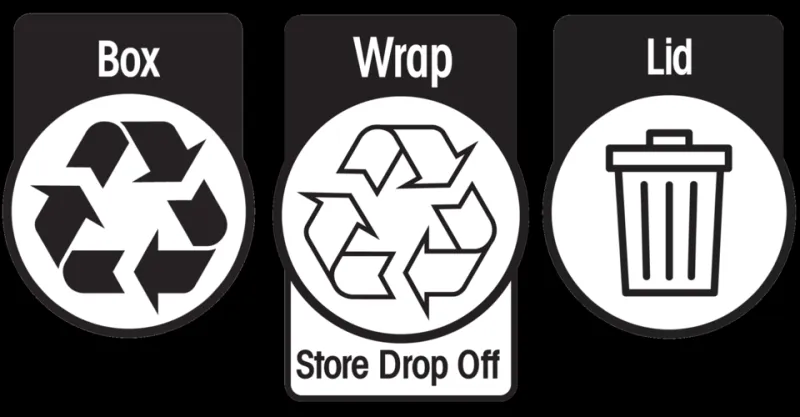
Photo: Planet Ark, PREP Design & Australian Packaging Covenant Organisation, CC BY-SA 2.5, via Wikimedia Commons
There's a particular shade of green that appears in about half the sustainability sections we see. It arrives with a leaf, a lowercase wordmark and a sentence about being kinder to the planet. It looks sincere. It also says almost nothing — and saying almost nothing while implying quite a lot is the fastest route to a letter you don't want.
Two regulators, one standard of proof
Two bodies matter here. The Competition and Markets Authority published its Green Claims Code, which sets out principles rather than a list of banned words: claims must be truthful and accurate, clear and unambiguous, must not omit relevant information, comparisons must be fair and meaningful, the full life cycle should be considered, and everything must be substantiated.
The Advertising Standards Authority polices the same territory through the CAP Code. Its position is consistent: environmental claims must be backed by evidence, must not exaggerate, and will be read as a reasonable consumer would read them — which is rarely as carefully as the copywriter intended. 'Carbon neutral' claims in particular have been tested repeatedly, and the ASA expects clarity about whether reductions or offsets are doing the work.
Since 2025 the CMA has also held direct enforcement powers under the Digital Markets, Competition and Consumers Act, including the ability to fine businesses for misleading commercial practices without going through court. That changes the calculation. Greenwashing is no longer a reputational risk that might surface in a trade press piece; it's a compliance line item.
Vague copy versus defensible copy
The useful exercise isn't rewriting your whole tone of voice. It's taking the slogans you already have and asking what evidence sits behind each one. Here's the pattern we see most often, and a version that would survive scrutiny:
- 'Eco-friendly packaging' becomes 'Our cartons are made from 85% recycled fibre and are collected kerbside by most UK councils. The lid is not currently recyclable.'
- 'Sustainable coffee' becomes 'These beans are Rainforest Alliance certified and travel by sea rather than air.'
- 'Carbon neutral delivery' becomes 'We measure delivery emissions and offset them through a verified scheme. That covers transport only, not our warehouses.'
- 'Powered by green energy' becomes 'Our electricity comes from REGO-backed UK wind generation.'
- 'We care about the planet' becomes — honestly — nothing. Delete it and use the space for a fact.
Notice what changed. The specific versions are longer, more interesting and less flattering. That last part matters. The vague claim is always more impressive than the evidence behind it; the honest claim has limits built in.
A substantiation checklist for busy marketers
Before anything goes to sign-off, run these seven questions. They take ten minutes and save months.
- What exactly are we claiming, in one plain sentence? If the team gives three different answers, the copy is ambiguous.
- Which part of the life cycle does it cover — sourcing, manufacture, transport, use or disposal? Say which.
- Compared with what? 'Lower carbon' needs a baseline, and the baseline needs a date.
- What's the evidence, who produced it, and when was it last checked? A supplier's marketing PDF is not evidence.
- Is the qualifier as prominent as the claim? A footnote at six point isn't a qualifier.
- Would a shopper who reads this quickly get the same impression as one who reads it closely?
- Can we still prove this in twelve months, when the campaign is still running and the supplier has changed?
If any answer is 'we'll sort that later', the claim isn't ready. Build the evidence file alongside the creative brief, not after the shoot.
Words that need a definition attached
'Natural', 'green', 'eco', 'sustainable', 'biodegradable', 'compostable', 'net zero', 'carbon neutral', 'planet-friendly'. None are banned. All of them are meaningless without a defined meaning and a source. Biodegradable is the trickiest: it depends entirely on conditions, and a material that breaks down in an industrial facility may sit intact in landfill for decades. Consumers shouldn't have to guess.
The creative upside
Here's the part that gets missed in compliance meetings — specificity is a creative gift. 'We ship by sea' is a better line than 'sustainable' because it's concrete, visual and slightly unexpected. It gives you something to photograph. It gives a copywriter a fact to build a campaign around.
It also protects the brands doing the actual work. Every vague claim in a category makes the credible ones look like marketing noise, and shoppers have become quick at spotting the pattern. The brands that will win the next few years are the ones whose sustainability pages read like an evidence file rather than a mood board.
Working it into the process
Three practical moves. First, add a substantiation field to your creative brief so nobody writes a claim without knowing where it comes from. Second, bring whoever owns legal or compliance into the room at concept stage, when changes are cheap — not at artwork stage, when they aren't. Third, keep a claims library: every approved claim, its evidence, its expiry date and where it's used. It takes an afternoon to build and it pays for itself the first time someone leaves and takes the knowledge with them.
One more thing worth saying plainly: the beige-green aesthetic that dominates eco creative is itself a borrowed code. Every brand in the category looks like every other brand in the category, which means the honest one has to work twice as hard to be noticed. Distinctive design and defensible claims aren't in tension. They're the same job.
Say less, prove more
If your apple is green, say it's green. Don't paint it red, and don't call it the greenest apple in the orchard unless you can show the data. The claim isn't the problem — the overreach is. Specific detail does the persuading, and it's the only version of the story you can keep telling once the campaign has ended.