What Happens to Your Brand After 9pm? Food and Drink Advertising in 2026
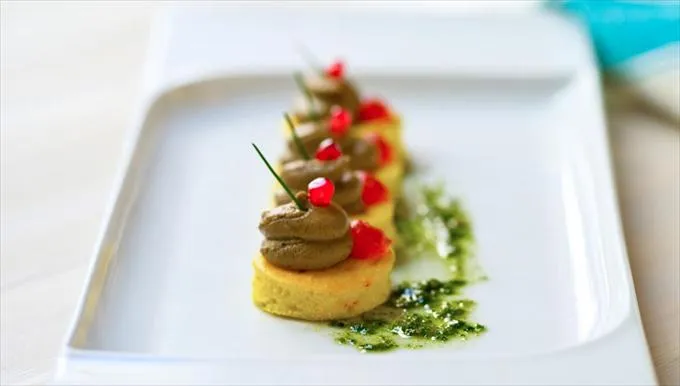
Photo: www.fewgoodclicks.com, CC BY-SA 3.0, via Wikimedia Commons
There's a particular kind of meeting that happens in food and drink marketing departments. Someone opens the media plan, points at a line item, and says: "So that's gone, then." It happened with the sugar tax. It happened when the 9pm watershed landed. It will happen again.
The watershed restrictions on advertising less-healthy food and drink — paid online ads and TV before 9pm, in England — came into force in October 2025. More than a year on, the picture is clearer than the doom-laden forecasts suggested. Some budgets did shrink. But the more interesting story is the brands that quietly reassembled their plans around the parts of the mix the rules never touched, and found the new arrangement worked rather harder than the old one.
The rules catch less than the panic suggested
Worth restating plainly, because a lot of briefs we see still over-comply. The restrictions apply to identifiable less-healthy products, defined by the nutrient profiling model, across a listed set of categories — soft drinks with added sugar, confectionery, cakes and biscuits, desserts, ice cream, pizza, ready meals, savoury snacks and the like. They cover paid online advertising and TV spots before 9pm.
They do not cover everything with a logo on it. Brand advertising that promotes a business rather than a specific in-scope product is treated differently, provided no identifiable less-healthy product appears. Out of home, press, radio, direct mail, packaging, in-store, sampling and owned content sit outside the paid-online and pre-9pm TV net in the main. And this is England — Scotland, Wales and Northern Ireland have their own positions, so a UK-wide campaign needs a UK-wide reading.
That's the shape of it. The detail is where people come unstuck, and it's not a job for a marketing manager with a search engine. Talk to your legal team, or a specialist, and get the answer in writing before the media buy goes out.
Don't assume you're exempt — but do check
Smaller businesses get more room. Broadly, SMEs below the employee threshold are exempt from the restrictions, and there are further carve-outs aimed at smaller operators. Plenty of independent brands we work with qualify.
The trap is assuming. Exemptions often turn on group structure, headcount across a parent company, or turnover rather than on the brand name on the pack. A bright young drinks label that's 60% owned by a larger group may not be the small business it looks like in the deck. Confirm your status, document the reasoning, and revisit it annually — because a good year can change the answer.
Treat it as a brief, not a budget cut
Here's the shift in thinking. The watershed didn't remove your ability to make people want what you sell. It removed a shortcut. What's left is a set of channels that reward craft, and a stack of them are sitting right there.
Packaging is the ad nobody can skip
Every pack on a shelf is an impression. If the paid media door has narrowed, the pack becomes the primary piece of creative real estate — and unlike a pre-roll, nobody scrolls past it in a supermarket aisle. Spend the money you've saved on a pack refresh, better shelf presence, a design system that works at thumbnail size and at two metres.
In-store is unregulated theatre
Sampling, gondola ends, demo staff, a bit of well-placed mischief at the fixture. Retail media inside a store environment and physical activation give you the trial moment that a 15-second spot never could. It's also measurable in a way that TV isn't — you know how many units moved off the shelf that Saturday.
Sponsorship and community, chosen properly
Sponsoring the thing your customers already care about — a local festival, a grassroots sports club, a food market, a podcast — buys you association rather than interruption. Check where programme sponsorship sits if you're going broadcast-adjacent, but event and community partnerships are largely open ground.
Creators, with the paid bit removed
Paid creator content promoting an in-scope product falls inside the rules. Creator content that's genuinely editorial — recipes, kitchen routines, a founder talking about how the thing is made — usually doesn't. The difference matters and it's not a loophole; it's a different kind of collaboration. Brief creators to make something people want to watch, not something that reads like a media buy.
Brand-led content with an actual point of view
A recipe hub. A sourcing story. A series about how the product gets made. Content that builds appetite and affection without naming an in-scope product is now doing the heavy lifting that pre-roll used to do badly.
What to measure now
Don't just track reach. Track the things that prove the new mix is building appetite:
- Rate of sale, not just units — is the shelf moving faster?
- Repeat purchase from sampling — the honest test of whether people liked it.
- Branded search volume — the cleanest signal that something is lodging.
- Aided awareness in your target region, wave on wave.
- Shelf share and fixture performance vs the category.
A short briefing checklist
Before the next plan goes out: confirm in writing whether each product is in scope; confirm your exemption status and log it; list which channels are unrestricted for you; separate brand-level creative from product-level creative and keep them genuinely separate; have legal sign off any creator brief that touches an in-scope product; check regional variations if you sell beyond England; and agree in advance which three measures will tell you whether it worked.
The watershed took away a lever. It left plenty of others. Most of them are closer to the customer than a pre-roll ever was.