The Kitchen Floor Studio: Designing Your Brand for Its Second Owner
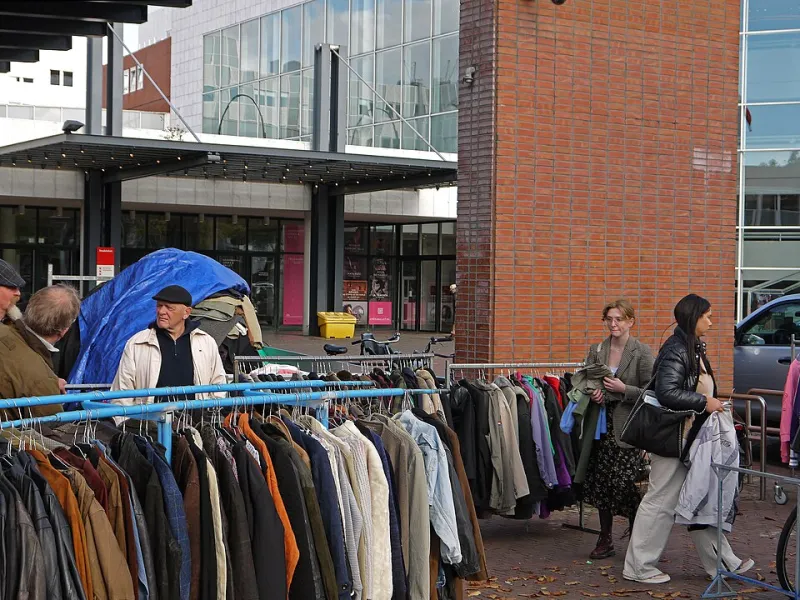
Photo: Fons Heijnsbroek, CC0, via Wikimedia Commons
Somewhere in Leeds, a jumper is being photographed on a kitchen floor. The light is poor, the label is half-turned, and the seller is holding a phone in one hand and a mug of tea in the other. It is not the launch image you signed off. But for the next buyer, it is the first time your brand appears in public.
In 2026, the second-hand shelf is not a niche. Vinted, eBay, Depop, charity shops and car boot sales are where plenty of UK shoppers meet a product for the first time. That listing is an unpaid media channel. You do not book it, brief it or approve the crop. You can, however, design for it.
The listing is the ad you never approved
A resale seller is not an ambassador. They are a person with a phone, a deadline and a pile of things to shift before the weekend. They will not steam the care label, style the shot or explain your brand story. They will photograph the item where it lands.
That matters because the second-hand listing is often the first honest product photo a buyer sees. No studio lighting, no retouching, no copywriter. Just the item, the label and whatever the seller remembers to type. If your brand mark has peeled off, the listing becomes "grey wool jumper" rather than your name. If the care label is a black square of unreadable symbols, the buyer guesses. Guessing is not a brand experience.
Design for the second photograph, not the first
The first unboxing is the easy one. Tissue paper, a foil sticker, a card that says thank you. Lovely. But the second photograph is the one that decides whether your brand survives a change of owner.
Durable brand marks matter more than decorative ones. A woven neck label outlasts an iron-on transfer. A debossed button or a printed inner neck keeps your name in the frame after twenty washes. A colour that fades unevenly makes the item look tired, not vintage. If your logo lives only on the swing tag, it leaves with the tag.
Put the brand name in more than one place: neck label, side seam, inside pocket, sole, base. Not because people are hunting for it, but because the second owner's photo will catch whatever is still there. Continuity is a design decision.
The care label is a sales assistant
A resale buyer asks different questions from a first buyer. What is it made of? Will it shrink? Is it true to size? How old is it? Has it been washed hard? Your care label can answer some of that before the seller types a word.
Use plain English alongside the symbols. State the fibre content clearly. Add a fit note if the cut runs small or generous. Keep the contrast high enough to read in a phone photo. Tiny grey type on a black label disappears in the kitchen-floor studio. The care label is not a legal afterthought; it is the product's second sales assistant.
Packaging that does not punish the second owner
Heavy packaging is a burden in resale. If the box is glued shut and wrapped in single-use plastic, the seller may not keep it, and the buyer may not want it. That is fine. Just do not rely on packaging to carry the brand if the packaging is designed to be thrown away.
If packaging is part of the product, make it photographable and reusable. A simple box with the brand name on the inside lid, a paper band that does not tear immediately, a cotton bag that survives a wash. These are small choices, but they give the second owner something to photograph that still looks like you.
Charity shops and car boots are your showroom
A charity shop rail is a crowded media space. Oxfam, British Heart Foundation, Barnardo's, local hospice shops: the label has to work at a glance. A car boot sale is worse. The item is in a box, half-covered by a tea towel, and the buyer is deciding in three seconds.
Strong colour, a clear logo and a label that sits where a hand naturally turns the garment all help. This is not about being loud. It is about being recognisable when the product is out of context and the seller has no reason to explain you.
Audit before the next production run
Before you sign off another run, spend an afternoon in the resale wild.
- Search your brand name on Vinted, eBay and Depop. Save twenty live listings.
- Look at the worst photos. Can you identify the brand without reading the caption?
- Check label legibility at phone size. If the logo is a smudge, it is not working.
- Read your own care label as a resale buyer. Does it answer fibre, fit and washing in plain English?
- Look for wear: peeling prints, faded colour, rusting metal, cracked transfers. Those are brand marks failing in public.
- Check whether packaging survives long enough to be photographed again. If not, stop treating it as a brand asset.
- Ask someone outside the business to describe the item from the listing photo alone. Note what they cannot tell you.
- Fix the next run: woven labels where transfers are failing, brand name repeated inside, higher-contrast care copy, colours tested after washing.
- Add "designed for the second owner" to your production sign-off. It is a brand planning question, not a factory detail.
The second owner is not a side effect of selling. They are a distribution channel. Design for their kitchen floor and your brand gets a second chance to be seen, recognised and trusted. That is not sentiment. It is media planning by another name.